Our top pick260 reviews
3 h3 Hour Heli Hike to the Tasman Glacier
★ 4.8 · 260 reviews
- Three hours, Two hours walking on the glacier
- Helicopter transfer to the ice
- Day trip
- Free cancellation
$540$180.00 / hour
Check availability→ The lake at the end of the ice
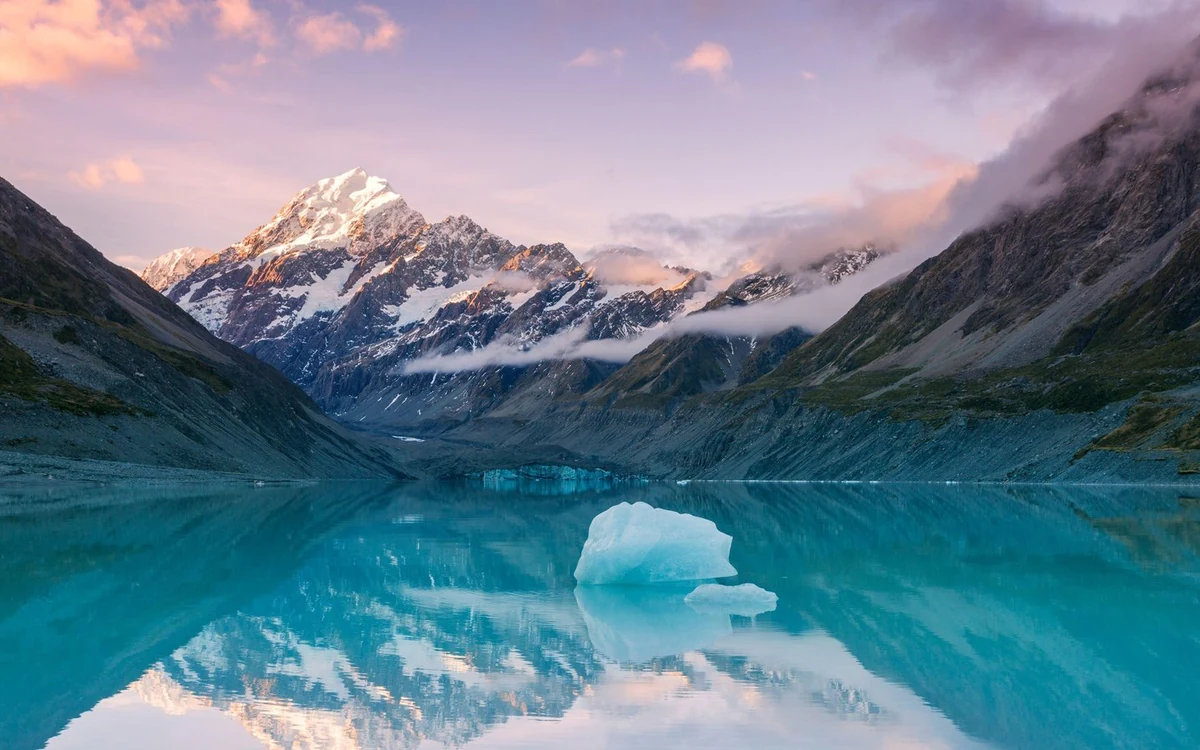
The Tasman Glacier does not end in a wall of ice you can walk up to. It ends in a lake, and that lake is the reason the walk from the valley car park finishes on a lookout rather than on the glacier. Icebergs break off the terminal face and drift across the water, which makes the view worth the short climb even though the ice itself is reached by helicopter from $514. Here is what the lake is, what floats in it, and which of the eleven trips on this site actually show it to you.
Quick answer
The short answer. Tasman Lake sits between the end of the glacier and the valley floor, and it is why nobody walks onto the Tasman Glacier from the road. The free Tasman Glacier View Track climbs to a lookout above the water, and on most days there are icebergs somewhere on it. If you want the glacier itself rather than the view of it, the heli hikes land you on the ice above the lake: two hours walking, from $514, with crampons and guiding included. The flights from $217 show you the whole system — lake, terminal and the long white run behind it — in one pass.
Why a glacier ends in a lake
Lake first, moraine second, ice third — and the track stops at the first one.
A glacier is a river of ice moving downhill, and like any river it has an end. At the Tasman Glacier that end sits in water. Meltwater collects in the basin the ice has carved out, the terminal face stands in it, and lumps of ice break away from that face and float off. Those lumps are the icebergs people photograph from the lookout.
This changes the geography of the visit. On a glacier that ends on dry gravel you can often walk up the valley floor until the ice is in front of you. Here the water is in the way, and behind it is a wall of loose moraine — the rock and gravel the glacier has pushed aside over time. The marked track climbs onto that ridge and stops there.
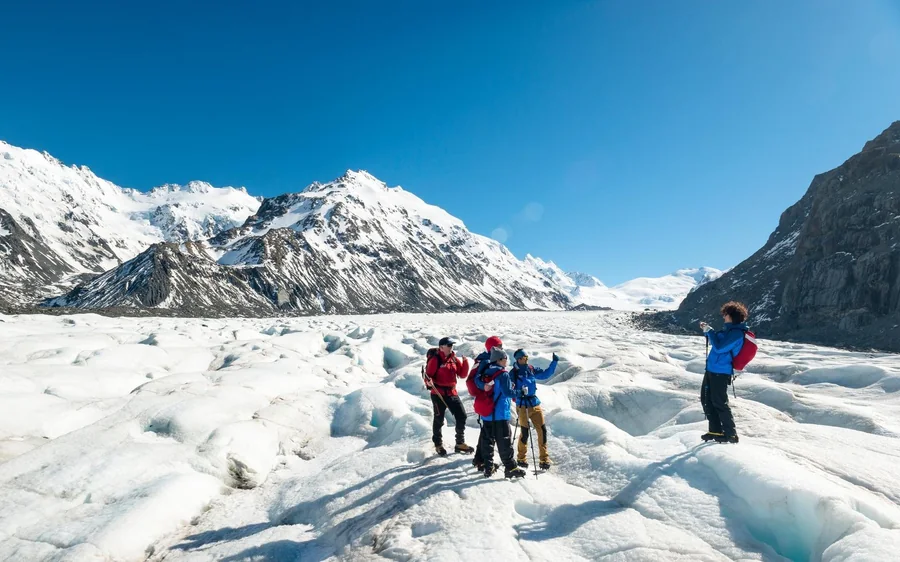
So the Tasman Glacier splits into two different experiences, and they are worth keeping separate in your head. One is the view: the lake, the icebergs, the terminal face and the mountains behind, from a lookout you reach on foot for nothing. The other is the ice: a landing high above the lake, boots and crampons, and a guided walk on the surface. The helicopter is not a luxury version of the walk. It is the only way the second one happens.
What the icebergs are doing
Ice breaks off, drifts, melts and rolls — the lake is different every week.
Icebergs on Tasman Lake come off the terminal face of the glacier. Ice at the front is under pressure from everything behind it, it is sitting in water, and pieces of it periodically break away and float free. That process is called calving, and it is ordinary: it is what a glacier ending in a lake does.
Once they are afloat, the bergs move. Wind pushes them around the lake, they collect at one end or another depending on the day, and they change shape as they melt. Some of them roll over, which is why the ice you see can be startlingly clean and blue on one face and dirty grey on another: the grey is the side that was in contact with rock.
What none of this gives you is a schedule. Nobody can promise a particular iceberg on a particular morning. What you can expect is ice somewhere on the water, and a view that changes between one visit and the next.
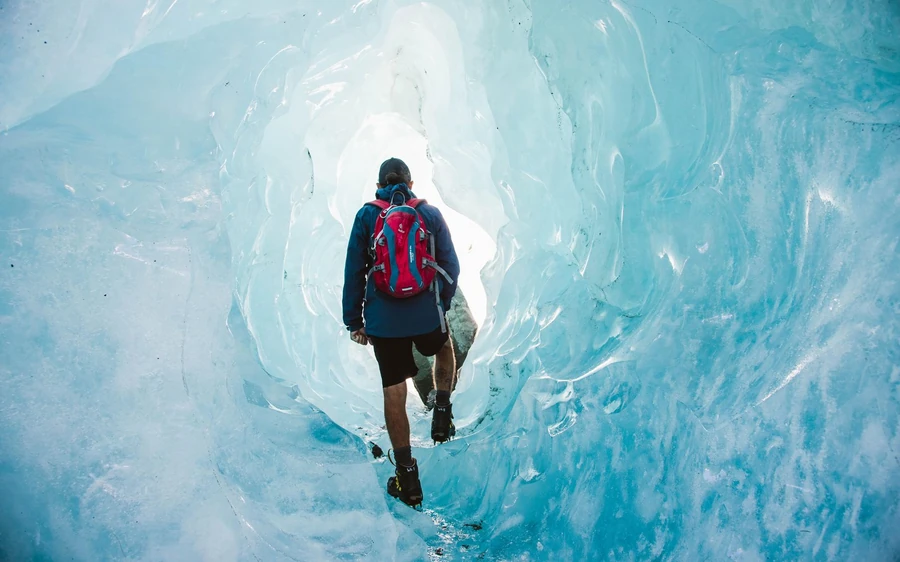
The blue is worth a sentence. Glacier ice reads blue because it has been compressed for a long time and the air has been squeezed out of it; the whiter, chalkier ice is younger and full of bubbles. On the heli hikes you get close enough to see both in the same wall.
Seeing the lake
The lake and the ice are separate purchases here. These are the four realistic ways to put eyes on Tasman Lake, cheapest first.
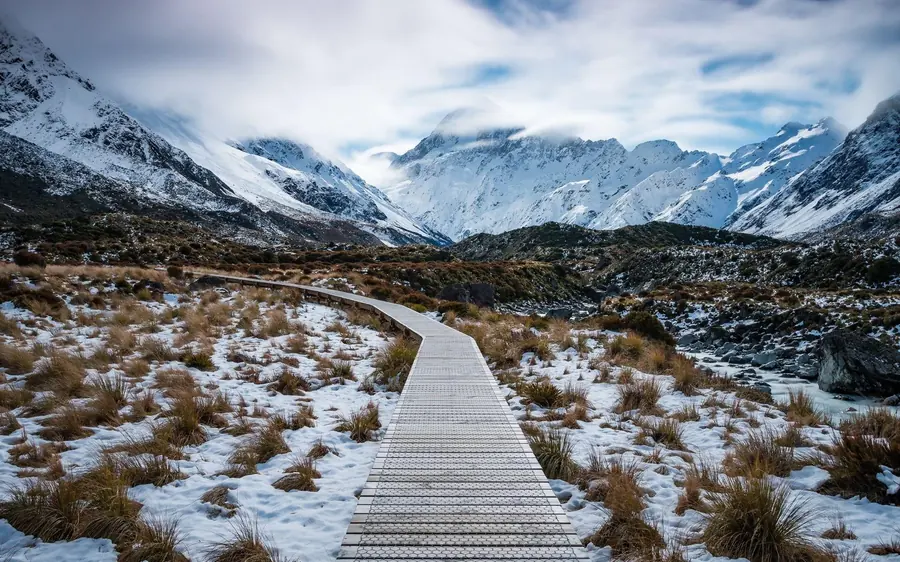
The track leaves the valley car park and climbs onto the moraine to a lookout above the water. It costs nothing, it is the shortest of these options, and it is the one almost everybody does. What it gives you is the lake, the icebergs on it and the terminal face across the water.
The full day from Christchurch at $200 runs thirteen hours and takes in Lake Tekapo and Lake Pukaki on the way as well as the Tasman Valley. If you are based in the city and do not want to drive the alpine roads yourself, this is the version that still gets you to the lake.
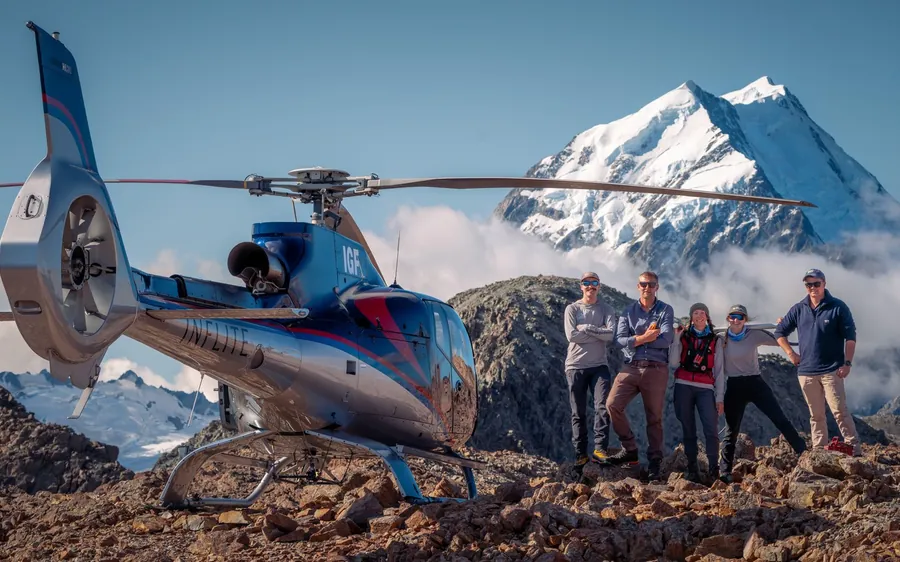
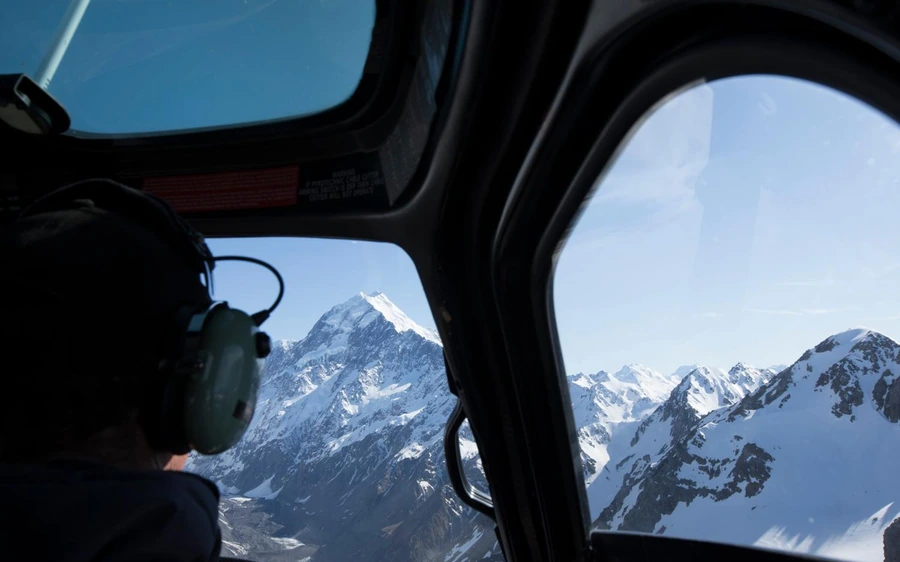
A scenic flight shows you what no lookout can: the lake, the terminal, and the long white run of the glacier stretching back into the mountains, all in one view. The short flight with an alpine landing runs from $217 at twenty-five minutes; the Tasman-specific flights sit at $363 and $375 for forty minutes.
The heli hikes fly over the lake and land on the glacier itself. $514 buys three hours with crampons and guiding included, rated 4.9 across 328 reviews; the companion trip at $540 gives two hours walking on the ice and carries 260 reviews at 4.8. This is the only option where the ice is under your boots.
Want the free option explained properly, with what it does and does not show?
The Tasman Glacier View Track→What the lake looks like from the air
The track shows the lake. The flight shows what fills it.
From the moraine lookout you are standing at the lake and looking across it. The proportions are honest but they are foreshortened: you see the water, the terminal face and the mountains, and very little of the glacier itself, because it runs away from you and uphill.
From a helicopter the geometry flips. The lake becomes one end of something much longer, and the scale of what feeds it is suddenly readable. This is the single strongest argument for a flight on a trip where you have already walked the track: they are not the same view twice, they are two halves of the same picture.
Flight lengths here run from twenty-five minutes at $217 to fifty at $477, which crosses the main divide and shows the West Coast on the far side. In the middle sit the two forty-minute options: $363 over the glacier and the wider national park, and $375 with a snow landing in the high basin. The ski plane combination at $314 puts a fixed-wing landing and a helicopter into one forty-five-minute booking and carries 360 reviews.
All of these are weather-dependent in a way the walk is not. A lookout works in cloud; a flight does not. That asymmetry is worth planning around.
Prices
Six of the eleven listings, with what each one gives you at the glacier and what an hour of it costs.
| Trip | Length | On the ice | Price | Cost per hour |
|---|---|---|---|---|
| 3 Hour Heli Hike to the Tasman GlacierTwo hours walking on the glacier | 3 h | Yes | $540 | $180.00 |
| 3-Hour Tasman Glacier Helicopter Ride and HikeLand high on the Tasman Glacier | 3 h | Yes | $514 | $171.33 |
| Scenic Helicopter Flight with Alpine LandingSnow landing in the Southern Alps | 25 min | Snow landing | $217 | $520.80 |
| Tasman Glacier Helicopter FlightDirect flight over the Tasman Glacier | 40 min | Snow landing | $375 | $562.50 |
| Tasman Glacier and West Coast Helicopter FlightTasman Glacier and the West Coast | 50 min | View only | $477 | $572.40 |
| Mt Cook Day Trip/Lake Tekapo & Tasman GlacierFull day from Christchurch | 13 h | View only | $200 | $15.38 |
Book direct
Two hikes that land on the ice, two flights over the lake, and the day trip that drives to the valley.
★ 4.8 · 260 reviews
★ 4.9 · 328 reviews
★ 4.7 · 517 reviews
★ 4.7 · 22 reviews
★ 5 · 3 reviews
Common questions
Usually, yes. Ice breaks off the terminal face of the glacier and floats on the lake, and wind moves it around through the week. Nobody can promise a particular iceberg on a particular day, but ice somewhere on the water is the normal state of the lake.
Not on foot. The Tasman Glacier View Track climbs onto the moraine and ends at a lookout above the water, which is the closest the marked route goes. The ice itself is reached by helicopter, from $514.
Ice that has been compressed for a long time has had the air squeezed out of it, and it reads blue. Younger, bubbly ice looks white or chalky. On a heli hike you can often see both in the same wall, which is one of the things people remember from the trip.
Yes, and they are not duplicates. From the lookout you see the lake, the icebergs and the terminal face at eye level. From the air you see the whole glacier feeding it. Most people who do both say the flight made sense of what they had already looked at.
For the water and the icebergs, the free view track. For the glacier behind them, a flight — $217 for twenty-five minutes with a snow landing, or $375 for a Tasman-specific forty minutes. For standing on the ice, the heli hikes from $514.
The thirteen-hour day trip from Christchurch at $200 includes the Tasman Valley along with Lake Tekapo and Lake Pukaki. The one-way transfer at $129 takes eight hours and drops you at Mount Cook Village if you are staying the night.
The lake is glacier-fed and the bergs are there year round, so a winter visit still gives you ice on the water. What winter really changes is the length of the day and the light, which is covered on the page about when to come.
Go deeper
The free view track, the flights with a landing, and the two hikes that walk on the ice.
The free view trackThe short walk from the valley car park, and exactly what it shows you.
Can you walk on itThe honest answer, and what the helicopter is actually for.
The heli hikeTwo hours on the ice, what is supplied, and how the two versions differ.
How long it takesTimes for the view track, the flights and the hikes, in one place.
Which glacier to walkTwo very different days out, compared on what you actually get.
3 Hour Heli Hike to the Tasman Glacier
★ 4.8 · 260 reviews · Free cancellation 24 h