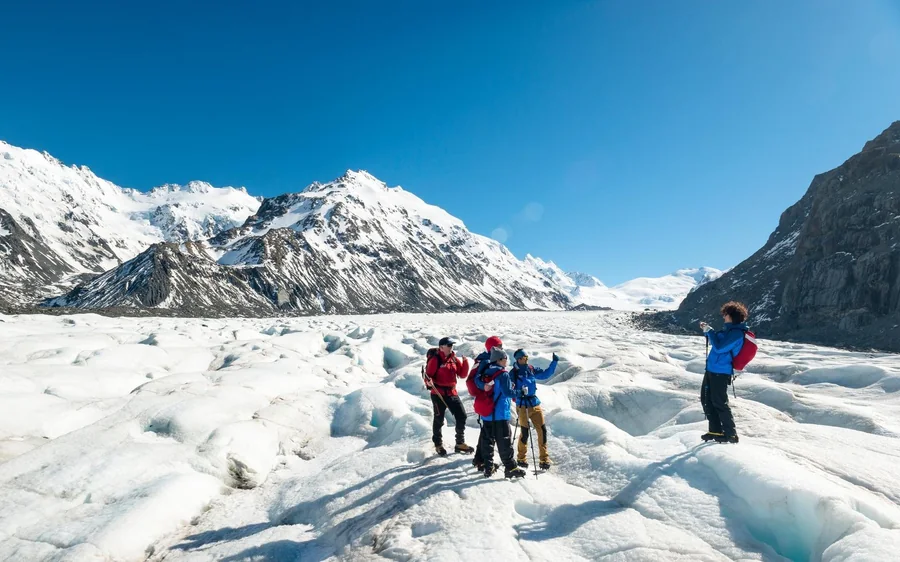
Likely to sell outRated 4.9
3 h3-Hour Tasman Glacier Helicopter Ride and Hike
★ 4.9 · 328 reviews
- Three hours, Land high on the Tasman Glacier
- Crampons and guiding included
- Day trip
- Free cancellation
$514$171.33 / hour
Check availability→ The straight answer
You can walk on the Tasman Glacier, and people do it every day the weather allows. What you cannot do is walk onto it from the valley: the terminal lake and the moraine sit in the way, so every guided walk on the ice begins with a helicopter transfer. Two listings do exactly this in three hours, from $514, with two of those hours spent walking on the glacier in crampons. This page explains how that day is arranged and what the alternatives cost.
Quick answer
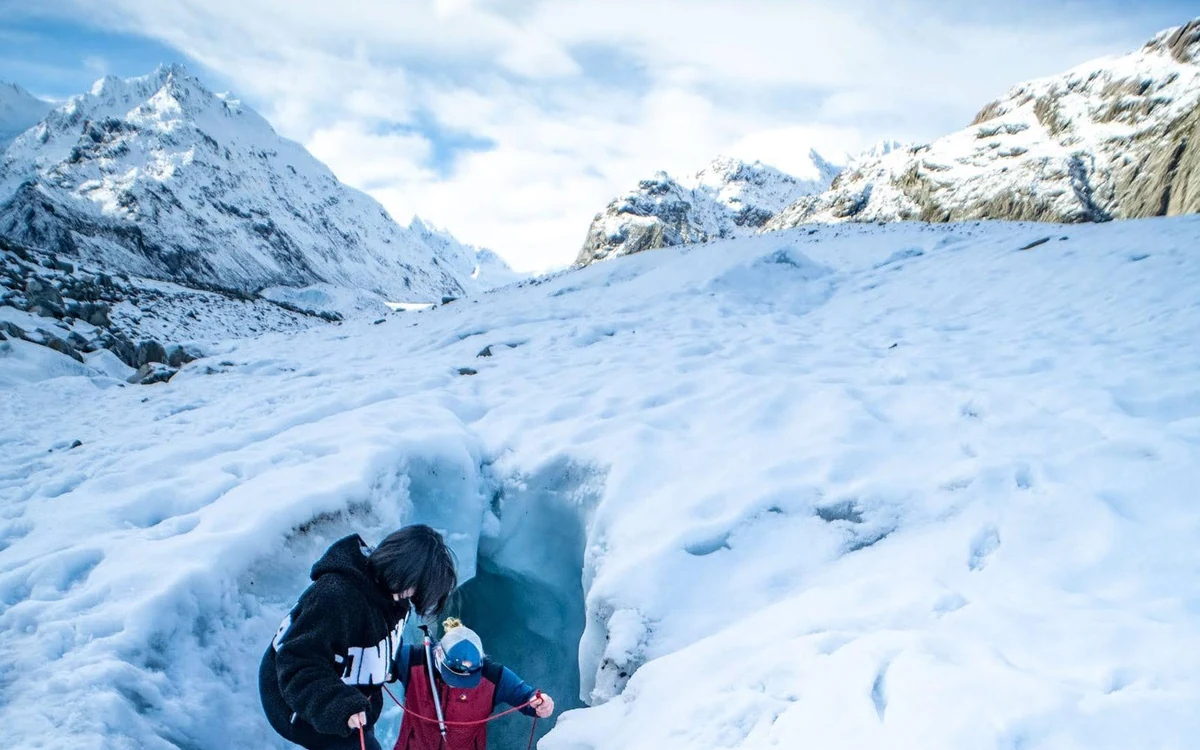
The short answer. Yes, on a guided heli hike. The helicopter lands you on the glacier, a guide fits crampons and leads the route, and you walk for about two hours before flying back. It costs $514 or $540 from Mount Cook Village, and $1,029 as a full day out of Queenstown. From the valley floor the free view track takes you to a lookout above the lake, but not onto the ice.
How it works
The trips start at Mount Cook Village. You check in, the guide runs through the kit, and the helicopter takes you up the valley and sets down on the glacier. The flight is short — it is a transfer, not a scenic tour, although the scenery on the way is the same scenery people pay $363 to fly over.
On the ice, crampons go on and the guide leads. The route is not fixed: a glacier moves, and the way through the surface features changes with it, which is why these trips are guided only and why the guide walks ahead. The listings describe about two hours of walking within the three-hour trip, and that is the part you are buying.
Then the helicopter comes back for you. Total door to door is three hours on both of the Mount Cook listings: $540 with 260 ratings at 4.8, and $514 with 328 ratings at 4.9. They are close in price and close in shape, and either one answers the question this page is named after.
Two hours is longer on ice than it sounds on paper. You are moving slowly, in crampons, over a surface that is never flat, and stopping often — for the guide to read the route ahead, and for the things that are worth stopping for. The listings describe walking on the biggest glacier in the country and a scenic fly-by on the way in, and both of those are accurate descriptions of what the three hours contain.
What you will not be doing is covering distance. This is not a traverse or a summit day; it is a guided walk on a small worked section of a very large glacier, and the point of it is the surface underfoot rather than the ground gained.
From Queenstown the same two hours on the ice sit inside a six-hour day at $1,029. A fixed-wing flight crosses the Southern Alps, a helicopter makes the transfer onto the glacier, and the whole thing returns the same afternoon. It is the most expensive listing on this site, and what it buys is the logistics: no drive to Mount Cook, no night in the village.
Book direct
Two from Mount Cook Village, three hours each. One from Queenstown, six hours door to door.
★ 4.9 · 328 reviews
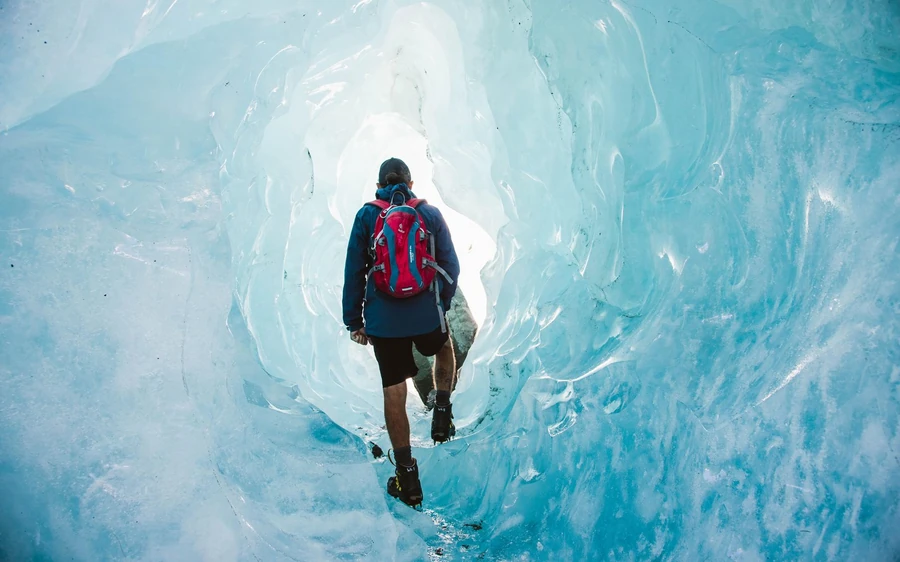
★ 4.8 · 260 reviews
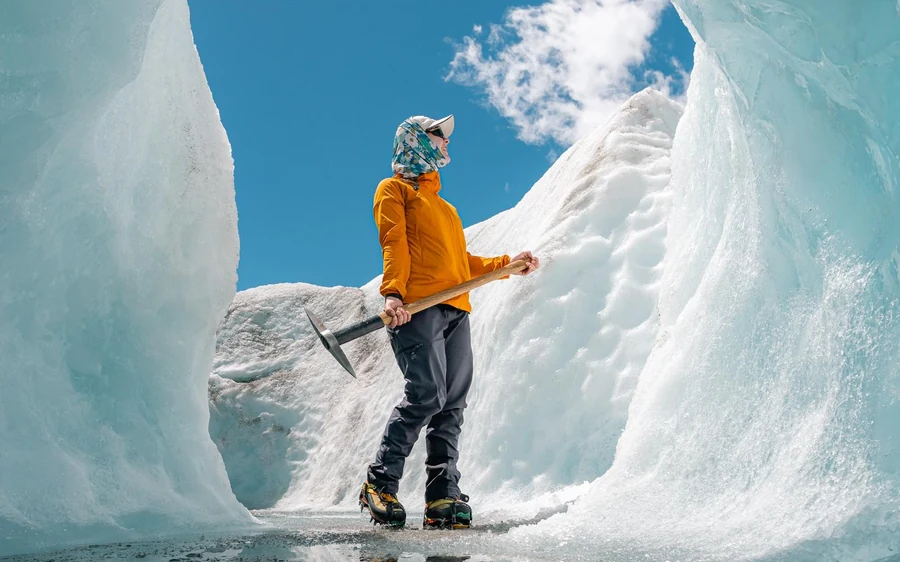
★ 4.5 · 11 reviews
Why it is done this way
The geography answers most of them.
The terminal lake and the moraine lie between the view track and the ice front. There is no ground route across them, so the walking starts where the helicopter lands.
The surface of a glacier changes. The route through it is worked out on the day, which is why the guide leads and why unguided access is not offered.
Grip on hard ice. They are included in the fare and fitted before you step out, along with the rest of the kit the operator supplies.
It is not. The 25 and 30-minute flights at $217 and $277 land on a snowfield, and you stand beside the aircraft. Walking the glacier is the heli hike.
The two listings
Both trips do the same thing — helicopter onto the ice, crampons, a guide, about two hours walking, helicopter back — and they sit within a few dollars of each other. The difference is in the numbers on their booking pages rather than in the shape of the day.
$540 carries 260 ratings at 4.8 and is the one this site puts first, because it is the most booked way onto the Tasman ice. Its listing describes the flight over New Zealand’s highest mountain on the way in, which is the part people remember even though it is nominally a transfer.
$514 carries 328 ratings at 4.9 — more reviews and a higher score — and is the lower fare of the two. Its page is flagged as likely to sell out, it runs in a small group, and it offers free cancellation. If you are booking ahead for a weather-dependent morning, that combination is worth something real.
There is no third option at Mount Cook. If both are full on the day you want, the alternatives are the flights with a snow landing from $217, which are a different experience, or the Queenstown day at $1,029, which is the same two hours on the ice wrapped in a six-hour round trip.
Timing
These trips need a weather window, and the window is more often in the morning than the afternoon. Book early in your stay rather than on your last day.
Dec–Feb
The fullest schedule and the longest days. Also the busiest — the listing flagged as likely to sell out is flagged for a reason in these months.
Mar–May
Settled conditions and fewer people competing for the same slots. A good window if your dates are flexible.
Jun–Aug
Trips run, the air is often clearest, but daylight is short and the weather moves fast. Leave a spare morning in the plan.
Sep–Nov
Quieter than summer with lengthening days. Conditions swing, so a morning departure and a flexible booking are the sensible pairing.
Want the full breakdown of what the heli hike includes and how the three hours split?
Read about the heli hike→Fitness
This is walking, not climbing. You are on your feet for about two hours on uneven ice in crampons, following a guide, with stops. The listings do not set a technical requirement, and the ratings — 4.8 and 4.9 across nearly 600 combined reviews — come from a broad range of visitors rather than from mountaineers.
Footwear is the one thing worth checking before you arrive: crampons are fitted over your own boots, so you want something sturdy with a firm sole rather than a soft trainer. The rest of the technical kit comes from the operator.
The thing to plan around is not fitness but weather. Helicopter transfers need a window, and at Aoraki that window is a morning thing more often than an afternoon one. If you have two nights in the village, book the ice walk for the first morning and keep the second as the spare. If you have one night, book the first available slot and treat the free view track as the plan that always works.
The companion listing at $514 is flagged on its booking page as likely to sell out and runs in a small group, which is worth knowing in the summer months when the village is full. Free cancellation is offered on that listing, which takes some of the risk out of booking a weather-dependent morning in advance.
Common questions
Yes, on a guided heli hike. The helicopter lands you on the ice, crampons are fitted, and you walk for about two hours. From $514.
No ground route crosses the terminal lake and the moraine. The free view track ends at a lookout above the lake, facing the ice.
About two hours, inside a three-hour trip from Mount Cook Village, or inside a six-hour day from Queenstown.
The listings do not set a technical requirement. You walk in crampons behind a guide on uneven ice, with stops.
Yes. Crampons and guiding are included in the fare on both Mount Cook heli hikes.
No. Those flights land on snow and you stand near the aircraft. Walking the glacier surface is the heli hike, from $514.
Flights wait for a window and get moved. Where free cancellation is offered it is shown on the booking page, and the free view track is the fallback that runs in most conditions.
Go deeper
The free view track, the flights with a landing and the walk on the ice, in one list.
The free view trackThe short walk above the lake, what it shows you and what it costs.
The heli hikeWhat the flight, the crampons and the guided hours on the ice include.
How long it takesEvery trip timed, from a 25-minute flight to a thirteen-hour day.
Which glacier to walkTwo very different glacier days, and which one suits your route.
Lake and icebergsWhat the terminal lake is, and why the icebergs move around it.
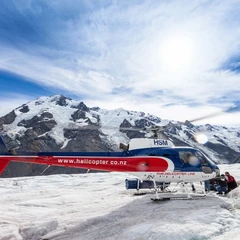
3 Hour Heli Hike to the Tasman Glacier
★ 4.8 · 260 reviews · Free cancellation 24 h